
Cart 2 india


In2Cart
Rs. 0

0



Product Information
Specification
Brand : Generic
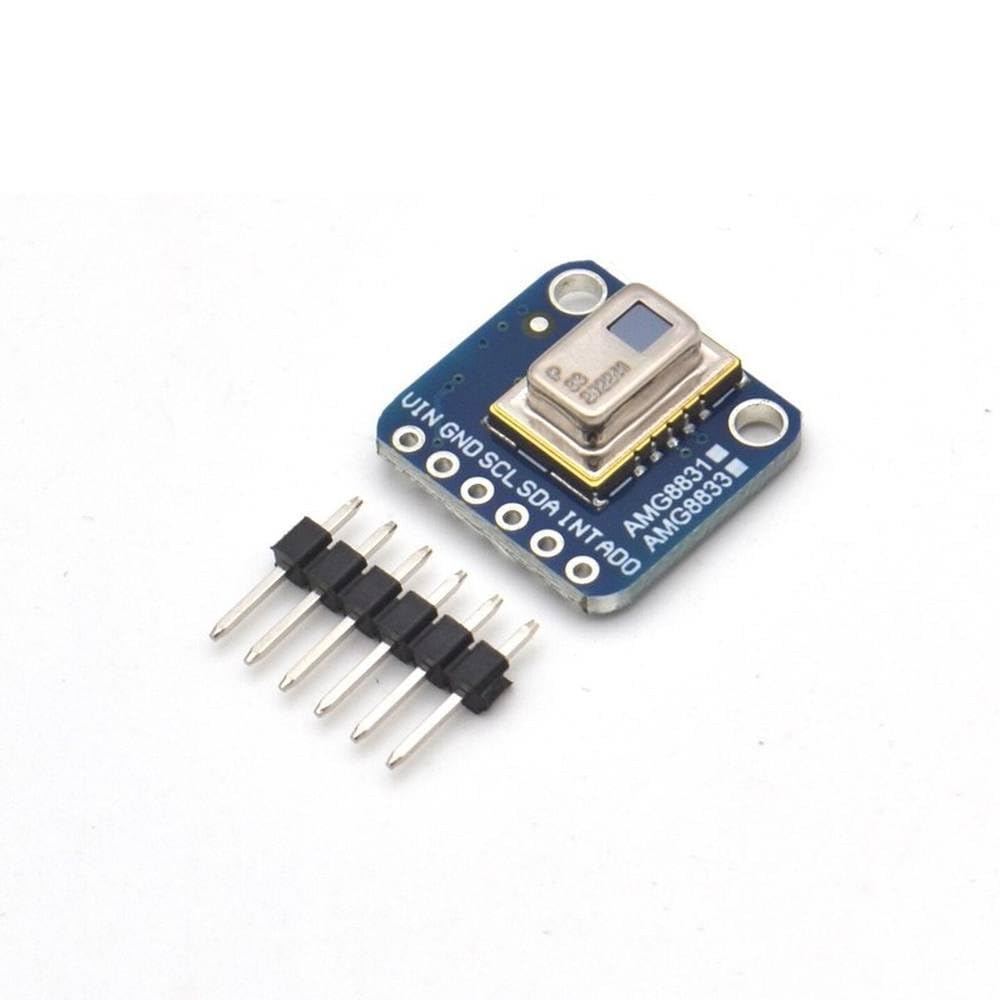
BulletPoint : AMG8833 IR 8x8 Thermal Imager Array Temperature Sensor Module For
BulletPoint1 : HD LCD Large Screen --- This temperature gun adopts HD LCD large screen with backlit display, data to keep easy observation.
BulletPoint2 : Excellent Sensor Technology --- LCD infrared thermometer gun combining excellent sensor technology and lenses. Thanks to the adjustable emissivity, values of up to plus or minus 2% can be read in just 0.5 seconds.
BulletPoint3 : Basic Data --- Emissivity of the temperature measuring gun is ‑50‑600°C (‑58‑1112°F), response time is 500 ms, 95% response.
BulletPoint4 : ABS Material --- This LCD thermometer gun is made of ABS material with excellent workmanship and stable performance.
BulletPoint5 : Wide Use --- LCD thermometer gun can be used for daily and industrial temperature measurement, such as cooking, refrigeration, steel, glass, plastic, food, etc.
ItemName : AMG8833 IR 8x8 Thermal Imager Array Temperature Sensor Module for
ItemPackageQuantity : 1
ItemTypeKeyword : infrared-thermometers
Manufacturer : Generic
Material : Copper
PartNumber : Lile_HFN_3032
ProductDescription : Product Parameters
1. Accuracy: + - 2.5°C (4.5°F).
2. Maximum frame rate: 10Hz,
3. Power supply: 3~5V
4. Temperature Measurement Range: 0°C to 80°C (32°F to 176°F)
Product Description
1. The AMG8833 infrared camera sensor is an 8x8 infrared thermal sensor array. When connected to your microcontroller (or ), it will return a set of 64 individual infrared temperature readings via I2C. It's like those fancy thermal cameras, but it's compact and simple and easy to integrate. The AMG8833 offers higher performance than the previous AMG8831. The sensor only supports I2C and has a configurable interrupt pin that can be triggered when any single pixel is above or below your set threshold.
2. It can detect humans from a distance of up to 7 meters (23) feet. It is a perfect fit for creating your own human detector or mini camera. We use this breakthrough code on or compatible (sensor communicates via I2C) or on Python's . On the Pi, thanks to the image processing help of the SciPy python library, we can insert an 8x8 grid and get some very good results!
ProductSiteLaunchDate : 2023-11-30T05:21:28.524Z
SupplierDeclaredDgHzRegulation1 : not_applicable
SupplierDeclaredDgHzRegulation2 : not_applicable
SupplierDeclaredDgHzRegulation3 : not_applicable
SupplierDeclaredDgHzRegulation4 : not_applicable
SupplierDeclaredDgHzRegulation5 : not_applicable
UnitCount : 1
UnspscCode : 46171600
